

Most chess games aren’t lost in the opening. And they aren’t magically saved in the endgame either.
They fall apart in the middle.
That messy phase where pieces are out, kings feel unsafe, and nobody is really sure what the plan is. That’s the middlegame, and for most players, especially beginners, it’s the hardest part to understand.
You might know some openings. You might even know how to checkmate with a rook and king. But once development is done and the board gets complicated, things go sideways fast.
This guide is about fixing that. No fluff. No “just calculate better” nonsense. Just real, usable ideas that help you play better middlegames, especially if you’re taking beginner chess lessons or getting serious about improving.
And yes, there’s a FREE training course at the end that pulls it all together.
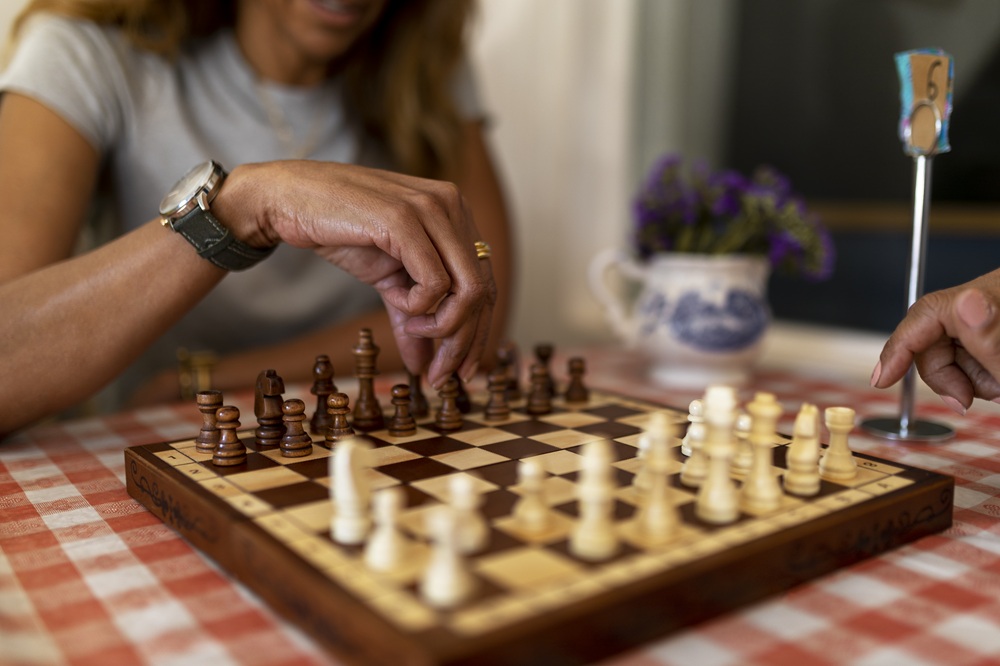
Why the Middlegame Breaks So Many Players
Here’s the honest truth.
Most players enter the middlegame without a plan. They just move pieces and hope tactics show up. Sometimes they do. Most times, they don’t.
Common problems look like this:
- You don’t know which side to attack
- You trade pieces without thinking about structure
- Your pieces feel active, but nothing actually happens
- One mistake, and the position collapses
This is why strong chess lessons focus heavily on the middlegame. It’s where understanding beats memorization.
The Real Job of the Middlegame
The middlegame is about improving your position while limiting your opponent’s options. That’s it.
Not flashy sacrifices. Not random pawn pushes.
Think of it as:
- Make your pieces better
- Make their pieces worse
- Create problems they can’t easily solve
If you keep that mindset, your moves suddenly start making sense.
Step 1: Learn to Evaluate the Position (Without Overthinking)
Before you choose a plan, you need to read the position. This doesn’t mean calculating 10 moves deep.
Ask these basic questions:
- Who has more space?
- Which king is safer?
- What pawn structures are locked or weak?
- Which pieces are doing nothing?
A quick mental checklist like this helps more than memorizing theory.
Beginner chess lessons often skip this step, which is a mistake. Evaluation comes before action.
Step 2: Stop Random Piece Shuffling
If you’ve ever played moves like:
- Rf1–e1–f1
- Queen side-step, then back
- Knights hopping with no target
You’re not alone. Everyone does it early on.
But here’s the fix:
Every piece move should answer “what am I improving?”
Examples:
- Rook to an open file
- Knight to an outpost
- Bishop aimed at a weak pawn
- Queen supporting an attack, not babysitting pawns
If the move doesn’t improve something, rethink it.
Structured chess lessons like the ones at Metal Eagle Chess are built exactly around this idea, purpose before movement.
Step 3: Understand Pawn Structure (This Changes Everything)
The pawn structure quietly controls the entire middlegame.
You don’t need to memorize names like “isolated queen pawn” right away. Start simpler.
Look for:
- Weak pawns that can’t be defended by other pawns
- Locked centers (means flank attacks)
- Open files created by pawn exchanges
Key rule:
Pawn moves are permanent. Piece moves are flexible.
That’s why strong players think twice before pushing pawns in the middlegame.
Step 4: Make Plans, Not Just Moves
Here’s where most beginners freeze.
They ask, “What move should I play?”
The better question is, “What’s my plan for the next 5 moves?”
A plan can be simple:
- Attack the king
- Improve the worst-placed piece
- Pressure a weak pawn
- Trade into a better endgame
Once you have a plan, finding moves becomes easier.
This is something solid chess lessons teach: repeatedly planning is a skill, not a talent.
Step 5: Learn Typical Middlegame Ideas (Patterns Matter)
Strong players don’t invent plans over the board. They recognize patterns.
Some common middlegame ideas:
- Battery on the king (queen + bishop or rook)
- Minority attack on the queenside
- Knight outposts on weak squares
- Doubling rooks on open files
- Trading defenders before attacking
You don’t need all of them at once. Learn a few, and use them often.
That’s how improvement actually happens.
Step 6: Don’t Fear Trading Pieces (Fear Bad Trades Instead)
Beginners often hear, “Don’t trade when attacking.” That’s half-true and often misunderstood.
Good trades:
- Remove opponent’s active pieces
- Exchange into a favorable structure
- Simplify when you’re ahead
Bad trades:
- Help the opponent activate pieces
- Remove your own attacking chances
- Ignore pawn structure consequences
Knowing the difference comes with guided beginner chess lessons, not guesswork.
Step 7: Tactics Still Matter
Yes, tactics win games.
But tactics come from good positions.
If your pieces are active and your opponent is cramped, tactics appear naturally.
Trying to force tactics from a bad position usually leads to blunders.
This is why structured training matters and why Metal Eagle Chess emphasizes positional understanding before flashy combos.
Looking for beginner-friendly courses? Check out our blog on the Top 5 Chess Courses for Beginners That Actually Help You Become Better at Chess.

Free Middlegame Training That Actually Helps
Here’s the thing.
Most players don’t need more opening lines.
They need clarity in the middle of the game.
That’s exactly why Metal Eagle Chess offers a FREE middlegame training course designed for:
- Club players
- Self-learners
- Anyone taking beginner chess lessons seriously
It focuses on:
- Real decision-making
- Common middlegame plans
- Mistakes players repeat over and over
- Clear explanations without ego or jargon
No pressure. No spam. Just training that makes sense.
Final Thoughts: Improvement Isn’t Magic
You don’t suddenly “get good” at the middlegame.
You get clearer.
Clear plans. Clear priorities. Clear understanding of why a move works.
If your games feel chaotic right now, that’s normal. It just means you’re at the exact stage where proper chess lessons make the biggest difference.
Take the free course. Study a bit. Play a lot. Review honestly.
That’s how middlegame strength is built, move by move.
Ready to Play Better Middlegames?
Stop guessing. Stop drifting through games.
Train with purpose.
👉 Start the FREE middlegame course at Metal Eagle Chess.
FAQs
1. Are middlegame concepts really necessary for beginner chess lessons?
Yes, absolutely. There are a lot of beginners who pay attention just to an opening and simple mates, and the majority of the games are determined during the middlegame. The plan, piece activity, and the structure of the pawn at a young age save years of confusion when one is older.
2. What is the duration of the time taken to develop middlegame understanding?
Within weeks, you will have seen improvement as long as you study and go through your games. It is not achieved immediately, but with the right guidance, one gets clarity quicker than most individuals would think.
3. Should I learn a lot of theory about the middlegame?
No. Middlegame improvement is not memorization but the comprehension of ideas. Orders of moves are relatively minor compared to patterns and principles.
4. Will a free chess lesson have any great improvement?
Yes, when they are organized and workable. Whether or not the lessons describe why moves do work is the important thing, rather than what to play. Price is not as important as quality.
5. Who is the target audience for the free course of Metal Eagle Chess?
Those who got stunned after the first opening or did not know what to do in the middlegame. It is particularly useful to players who undergo introductory chess training and want to make actual progress and not become overwhelmed.


